News & Events
We’re Moving!


We’re Moving!
By Jason Berty
Monday, February 1, 2021. All appointments on or after 2/1 will be at the new location.
Read more
When?
Where?
7209 N Shadeland Ave, Indianapolis, IN 46250. Less than 1 mile from current location.
Why?
FOR YOU! We are excited to more than double our treatment space, add a large outdoor play area and continue providing the quality services for your child.
Check out our Children’s Therapy Connection Facebook page for more details.
If you have any additional questions, please feel free to give us a call!
Our phone number is the same: 317-288-7606.


Why should we care about crawling?
By Jason Berty
- Tummy time from the start!
- Use a tunnel or cardboard box to play and encourage your child to crawl through.
- Spread toys out in an open area out of reach.
- Get on your hands and knees and pretend to be a dog or cat and play chase with your child.
- Encourage rocking on hands and knees.
- Demonstrate crawling for your child or have older siblings demonstrate crawling.
Read more
Written by Michaela Bortle, PT, DPT
“Oh my son never crawled, he just hopped up and started running one day!” It’s a phrase you might hear one of the other parents at church, mom’s day out, or on your weekly trip to the park say; but don’t be fooled, crawling is an important part of a child’s development! That’s not to say that a child skipping crawling is necessarily bad or harmful, but crawling should be encouraged during development, even if it comes after a child learns to walk!

Here are some of the reasons that crawling is an important stage of child development:
Development of joint stability and muscle strength.
Crawling is important in developing stability and strength in the trunk, arms, and legs which are all important for future gross motor skills. Crawling even strengthens structures related to breathing, talking and eating!
Fine motor benefits.

There are also fine motor benefits to crawling including lengthening finger muscles, development of the arches in the hand, and development of the thumb and webspace. All of these help with future grasping and manipulation of smaller items, pencils, spoons, etc.
Physical and neurological coordination.
Proper crawling form involves the opposite arm and leg moving at the same time which requires the right and left sides of the brain to communicate. The communication between the two sides of the brain is essential for all sorts of activities in life such as walking, running, riding a bike, dressing, etc.

Binocular vision.
This visual skill develops as your child looks to the distance at where they are going and then back down at their hands while crawling. This aspect of vision is important for future tasks that require us to calculate distances and adjust our vision between distances such as catching a ball, driving, and copying down writing during class.
Sensory benefits.
Crawling on hands and knees incorporates five different sensory systems: skin, muscles and joints, inner ear, eyes and even ears! This helps babies better understand where their body is in space and helps them plan their future movements.
So, now that we know why crawling is important, how can you encourage your child to crawl?
Here are some ideas:


Although there is no definitive proof that a child skipping crawling has a negative impact on future development and function, since there are many benefits to crawling it is important to encourage your child to crawl even if it is only for a short period of time before walking or even after walking has begun!
Make a big splash with Aquatic Therapy!
By Jason Berty
Water-based therapy can be just the challenge, or motivation, your child needs! Join us at the Benjamin Harrison YMCA. Immediate appointments available now!
CTC announces partnership with YMCA
LEGO® Skill Builder Clubs
By Jason Berty
Calling all Master Builders! School-aged peer groups provide a platform to address social skill-building strategies. We make learning fun by playing to a child’s strengths, not their disabilities.
Building Skills for Autism, social anxiety, and speech delays one brick at a time.
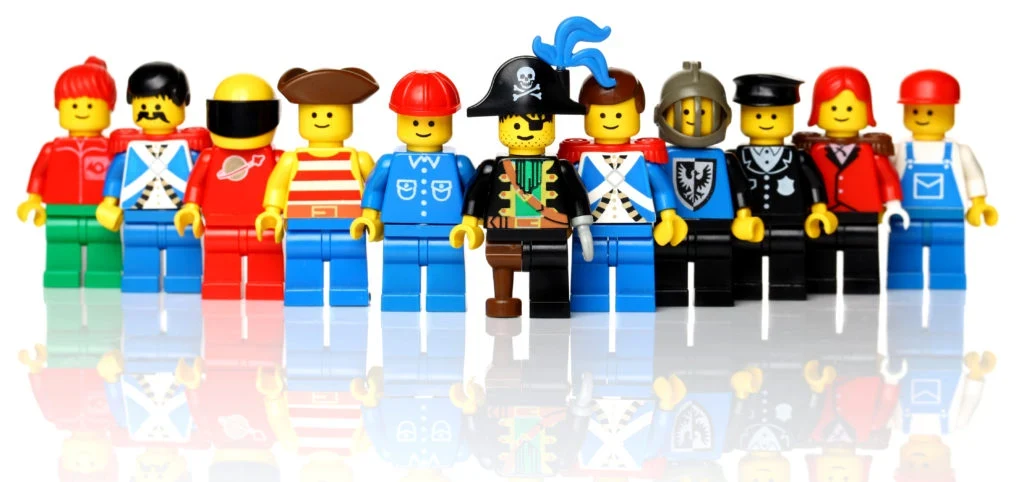
LEGO® Skill Builder™ Clubs
By Jason Berty
Calling all Master Builders! Children’s Therapy Connection is now forming LEGO® Skill Builder™ Clubs for children with social anxiety conditions, Autism spectrum disorders, or communication difficulties. From Asperger’s Syndrome to speech delays, LEGO® building can be a valuable component to any therapy program.
Read more
Calling all Master Builders! Children’s Therapy Connection is now forming LEGO® Skill Builder™ Clubs for children with social anxiety conditions, Autism spectrum disorders, or communication difficulties. From Asperger’s Syndrome to speech delays, LEGO® building can be a valuable component to any therapy program. CTC takes it to the next level with our Skill Builder™ Clubs, providing school-aged peer groups a platform to share their individual strengths while addressing social skill-building strategies such as using greetings, turn-taking, making eye contact, nonverbal communication.
School-age clubs – Join a group based on your child’s age and social skill level
After school meetings – Build on your child’s individual strengths through the social context of regular weekly sessions
Evidence-based play – Skill-building approach to improve motivation for social interaction and establishing relationships
Great contrast to ABA therapy – Natural LEGO® play holds great inherent reward for children and provides excellent generalization of skills across settings
For additional details please contact our office at (317) 288-7606. Enroll now at www.childrenstherapyconnection.com!